
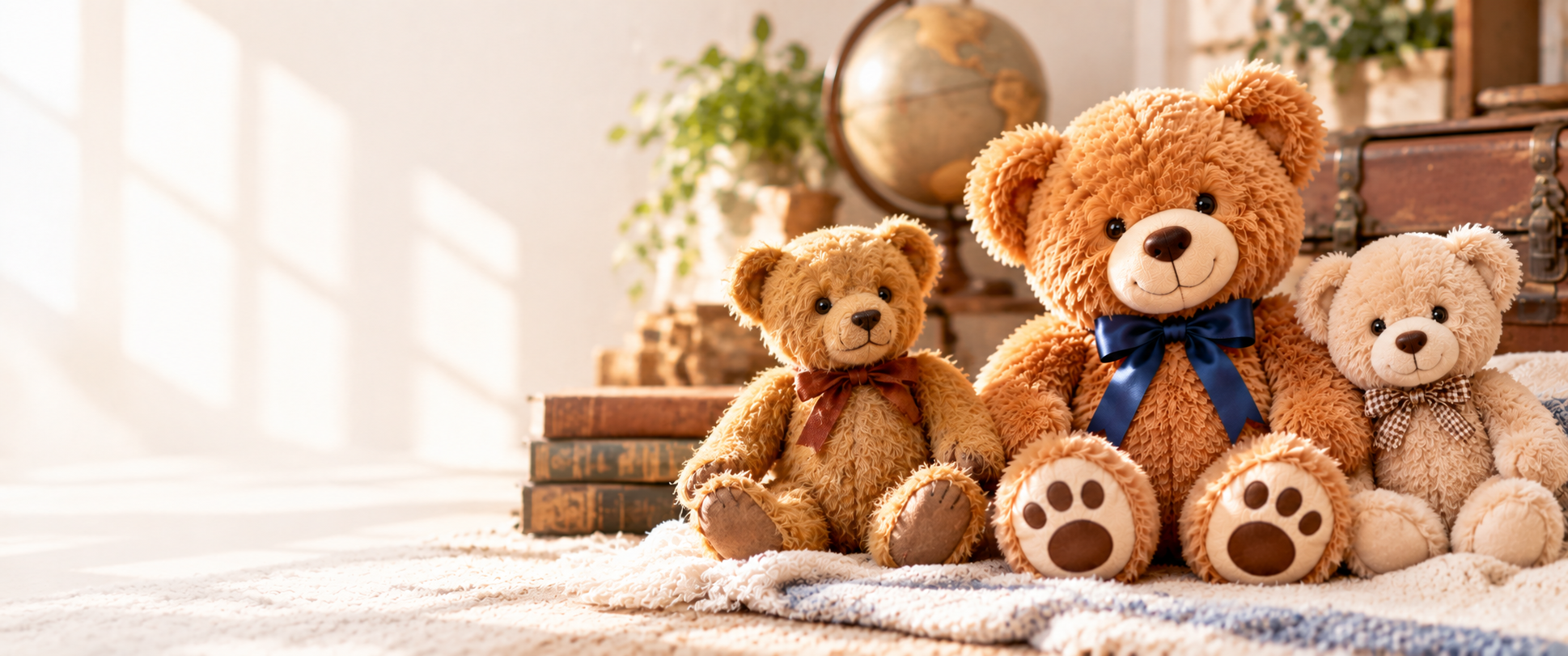
Teddy Bears – Facts, History & Common Questions
From the origin of the teddy bear to vintage bears, collectors and modern plush designs, explore the history, terminology and common questions behind one of the world’s best-known stuffed animals.
What is a teddy bear?
A teddy bear is a stuffed toy designed in the form of a bear. Teddy bears have been made in countless sizes, materials and styles, from traditional jointed bears to soft modern plush toys designed for cuddling.
Although teddy bears are strongly associated with childhood, they are also collected by adults. Antique bears, limited editions, artist bears and bears from established manufacturers can all attract collectors.
Today, the term teddy bear usually describes a bear-shaped stuffed animal, while stuffed animal or plush can describe a much broader range of animals and characters.
Why is it called a teddy bear?
The name “teddy bear” is connected to U.S. President Theodore Roosevelt, whose nickname was Teddy.
In 1902, Roosevelt took part in a bear-hunting trip in Mississippi. After he declined to shoot a bear that had been restrained for him, the incident became the subject of a widely circulated political cartoon.
Brooklyn shopkeepers Morris and Rose Michtom were inspired by the story and created a stuffed bear that became known as “Teddy’s Bear.”
At around the same period, the German company Steiff was developing its own early stuffed bears. These developments helped establish the teddy bear as a recognizable toy during the early years of the twentieth century.
10 interesting facts about teddy bears
Teddy bears have more than a century of history behind them. Here are ten useful facts about their name, design and popularity.
1. The name came from Theodore Roosevelt
“Teddy” was a nickname for Theodore Roosevelt, and the teddy bear name became associated with him after the famous 1902 hunting story.
2. Teddy bears appeared in the early 1900s
The recognizable teddy bear developed during the opening years of the twentieth century.
3. America and Germany both played major roles
The Michtoms developed an early American teddy bear while Steiff was producing early stuffed bears in Germany.
4. Early bears looked different
Many early teddy bears had longer limbs, pronounced snouts and firmer bodies than today’s soft plush bears.
5. Some teddy bears are jointed
Traditional designs can have movable arms, legs and heads using internal joints.
6. Teddy bears are collected
Antique, vintage, limited-edition and artist teddy bears can all be collectible.
7. Collectors have their own terminology
A person who collects or has a strong interest in teddy bears may be called an arctophile.
8. Teddy bears come in enormous size ranges
They can range from miniature collectible bears to giant teddy bears several feet tall.
9. Teddy bears aren’t only children’s toys
Adults may collect, display, give or keep teddy bears for sentimental reasons.
10. The basic idea has endured
Materials and styles have changed enormously, but the recognizable bear-shaped stuffed toy remains popular more than a century after its introduction.
Different types of teddy bears
There is no single teddy bear design. Bears can differ substantially in construction, appearance, intended use and age.
Classic teddy bears
Traditional brown or golden bears with recognizable bear proportions and a timeless appearance.
Jointed teddy bears
Bears with movable limbs and sometimes movable heads. Jointed construction is common among traditional and collectible teddy bears.
Soft plush teddy bears
Modern soft-bodied bears designed with cuddling and everyday handling in mind.
Vintage teddy bears
Older teddy bears that may be interesting because of their age, manufacturer, construction, provenance or design.
Artist bears
Teddy bears made by individual designers or small-scale makers, often primarily for collectors.
Giant teddy bears
Oversized bears designed to create a much larger visual impact than conventional teddy bears.
Why are teddy bears so popular?
Part of the teddy bear’s longevity comes from its remarkably flexible role. A teddy bear can be a child’s toy, a birthday gift, a keepsake, a collectible or a decorative object.
Teddy bears are also immediately recognizable. Even when manufacturers use very different colors, fabrics and proportions, the basic teddy bear form is easy to identify.
Their long history also means teddy bears can carry personal memories across generations. An old bear may matter because of who originally owned it or because it was given for an important occasion.
What is a teddy bear collector called?
The term arctophile is commonly used for someone who collects teddy bears or has a particular enthusiasm for them.
The related term arctophily refers to collecting or having an interest in teddy bears.
Collectors may focus on particular manufacturers, periods, materials, artists, characters or styles. Others simply collect bears they personally find interesting.
Not every teddy bear collection needs to be valuable or historically important. Collecting can be based entirely on personal preference.
Are old teddy bears valuable?
Some old teddy bears can have collector value, but age alone does not automatically make a bear valuable.
Manufacturer, model, age, rarity, condition, original features and documented history can all affect how collectors view an old bear.
Labels, buttons, tags and other manufacturer markings can be particularly useful when trying to identify a teddy bear. Construction details such as joints, paw pads, eyes and materials can also provide clues.
Avoid aggressive cleaning or restoration if you believe an old bear may be collectible. Altering original components can affect both its historical character and collector appeal.
Cleaning an older bear? See our stuffed animal washing and care guide before deciding how to clean it.
How big are teddy bears?
Teddy bears are made in an enormous range of sizes. Miniature bears may measure only a few inches, while giant teddy bears can be several feet tall.
When comparing sizes, check how the manufacturer measures the bear. Sitting height and total standing height can produce very different numbers.
A 12-inch teddy bear is roughly one foot in its listed dimension, while a 24-inch bear is about two feet. A 60-inch giant teddy bear is approximately five feet.
For detailed conversions and comparisons, see our stuffed animal size guide.
Why are teddy bears popular gifts?
Teddy bears work across many occasions because they are familiar, easy to recognize and available in styles ranging from playful to traditional.
They may be given for birthdays, holidays, romantic occasions, celebrations or simply as a thoughtful gesture.
The right teddy bear depends less on a universal definition of the “best” bear and more on the recipient’s age, interests, preferred style and the meaning of the occasion.
For more help choosing, see our stuffed animals as gifts guide.
Teddy bear FAQ
What is a teddy bear called?
A teddy bear is a bear-shaped stuffed toy. It may also be described more generally as a stuffed bear, plush bear or stuffed animal.
Why is a teddy bear called Teddy?
The name is associated with Theodore “Teddy” Roosevelt and a widely publicized 1902 bear-hunting incident. The story inspired an early American stuffed bear known as “Teddy’s Bear.”
Who invented the teddy bear?
Teddy bear history has important early developments on both sides of the Atlantic. Morris and Rose Michtom created an early American teddy bear, while Steiff was developing early stuffed bears in Germany during the same general period.
What is a person who collects teddy bears called?
A teddy bear collector or enthusiast may be called an arctophile.
What is teddy bear collecting called?
The term arctophily is used for collecting or having an interest in teddy bears.
What are old teddy bears called?
Depending on their age and context, older bears may be described as old, vintage or antique teddy bears. These terms do not by themselves establish a bear’s value or exact age.
How can I tell how old my teddy bear is?
Start with labels, tags, manufacturer marks and other identifying features. Construction, joints, eyes, materials and documented ownership history may also provide useful clues.
Are old teddy bears worth money?
Some are, but age alone does not determine value. Manufacturer, rarity, condition, originality, provenance and collector demand can all matter.
Are teddy bears only for children?
No. Teddy bears are also collected, displayed and given as gifts by adults. Some bears are specifically produced with collectors in mind.
What is the difference between a teddy bear and a plushie?
Teddy bear describes a bear-shaped stuffed toy. Plushie is a broader informal term that can describe many kinds of soft stuffed characters and animals.
What is the best type of teddy bear?
There is no single best type. A soft modern bear may suit everyday cuddling, while a traditional jointed or limited-edition bear may appeal more to a collector. The right choice depends on how the bear will be used.
How do you clean a teddy bear?
Start with the manufacturer’s care label. Washing instructions vary according to materials, filling and construction. See our stuffed animal washing and care guide for more information.
More stuffed animal guides
Learn how to choose stuffed animals by age, compare sizes, care for plush toys and find the right stuffed animal as a gift.
Safety note: Information on GetATeddyBear.com is general guidance. Always follow the manufacturer’s current age recommendations, warnings and care instructions for the specific product.